

Erosion Control Plants for Sloped Yards in Marion, NC
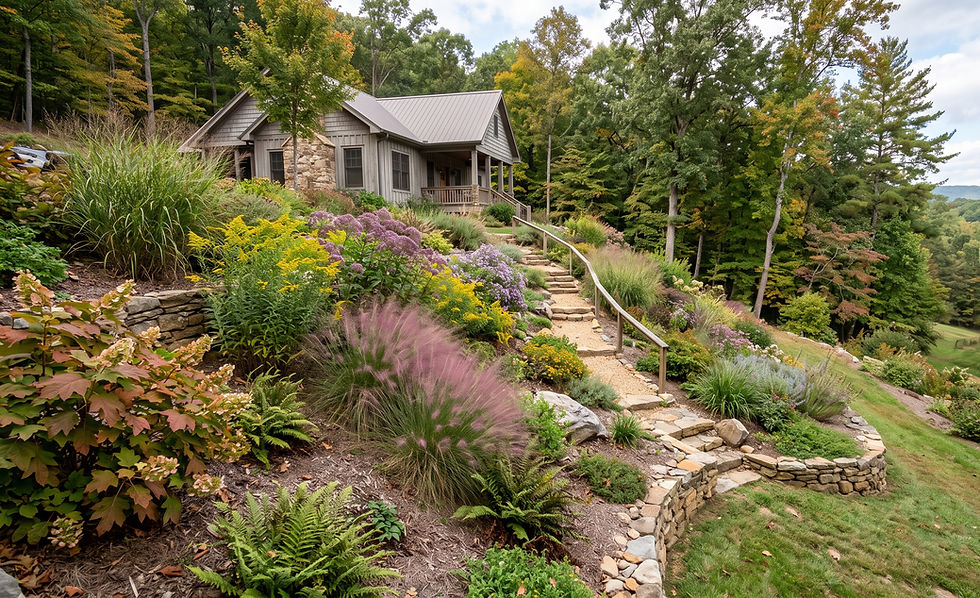
Best Plants to Stop Soil Erosion in Western North Carolina
If you read last month’s blog on erosion control, you already understand how serious soil loss can be for sloped properties across Marion, NC and McDowell County. But not every erosion issue requires heavy equipment or structural solutions right away. In many cases, the right plant selection can play a powerful role in stabilizing soil, slowing runoff, and protecting your landscape long-term.
Branson McClure, owner of Solid Ground Outdoor, works with homeowners throughout Western North Carolina to combine erosion control strategies like grading, drainage, and retaining walls with strategic plant installation. In the right conditions, plants are one of the most effective and natural ways to prevent soil loss on sloped yards.

What plants help prevent erosion on sloped yards?
Plants help control soil erosion by anchoring organic matter with their root systems and reducing the speed of water runoff. The best erosion control plants for sloped properties are those with deep, spreading roots that hold soil in place even during heavy rainfall.
In Western North Carolina, effective options include:
Ornamental grasses with dense root systems
Ground cover plants that spread quickly
Native shrubs adapted to mountain terrain
Perennials that tolerate heavy rain and humidity
These plants work together to create a natural barrier that stabilizes slopes and protects against soil movement.
What are the best erosion control plants for Marion, NC properties?
Because Marion and McDowell County feature clay-heavy soil and steep terrain, plant selection must be tailored to local conditions. Native and well-adapted plants perform best because they are suited to the region’s rainfall patterns and temperature fluctuations.
Popular choices in Western North Carolina include:
Creeping juniper for low-maintenance ground cover
Switchgrass for slope stabilization
Daylilies for durable, spreading coverage
Ferns for shaded hillside areas
Mountain laurel for natural, long-term stability
Using regionally appropriate plants ensures better survival rates and stronger erosion protection over time.

Can plants alone stop soil erosion on sloped properties?
Plants are highly effective, but they are not always a complete solution on their own.
In many Marion-area properties, erosion is caused by a combination of steep slopes, poor drainage, and concentrated water flow. While plants help stabilize soil, they may not be enough if water is moving too quickly across the surface.
That’s why Solid Ground Outdoor often combines planting with:
Yard grading to redirect water
Drainage installation to control water erosion
Mulching to protect exposed soil
Retaining walls for structural support
Plants are often the finishing layer of a complete erosion control system—not the only solution.
When is the best time to plant for erosion control in Western North Carolina?
Timing plays an important role in plant success. In Western North Carolina, late spring through early fall is ideal for establishing erosion control plants because soil temperatures are warm and growth is active.
However, planning often begins earlier in the year.
Homeowners who experienced erosion during spring rains can benefit from installing plants in early summer, allowing root systems to establish before fall storms and winter conditions.
Proper timing helps ensure plants take hold quickly and begin protecting the soil as soon as possible.

Do you still need drainage or grading with erosion control plants?
In many cases, yes.
If water is not properly managed, even the best plants can struggle to prevent erosion. Drainage and grading address the root cause of soil movement, while plants provide additional stabilization and protection.
Signs you may need more than plants include:
Standing water after rain
Fast-moving runoff across slopes
Deep erosion channels or washouts
Water pooling near your home
If these issues are present, a combined approach is the most effective way to protect your property long-term.
How does plant installation fit into a complete landscape solution?
Erosion control planting is often part of a larger landscape plan. Once slopes are stabilized and drainage is managed, plant installation improves both the appearance and functionality of the property.
Well-designed plantings can:
Reduce long-term maintenance
Improve curb appeal
Support healthy soil conditions
Complement retaining walls and hardscaping
Create a more natural, finished look
For homeowners in Marion and surrounding WNC areas, plant-based erosion control offers a balance between beauty and performance.

Ready to Protect Your Yard with Erosion Control Solutions?
If your property is dealing with soil loss, runoff, or slope instability, now is the time to take action. Plant installation can be a powerful part of the solution—but only when combined with the right overall strategy.
Branson McClure and the team at Solid Ground Outdoor provide erosion control, drainage solutions, grading, retaining walls, and professional planting services throughout Marion, McDowell County, and Western North Carolina.
FAQs
Q: What are the best plants for erosion control in North Carolina?
A: The best plants include native grasses, ground covers, shrubs, and perennials that develop strong root systems. In Western North Carolina, options like creeping juniper, switchgrass, ferns, and mountain laurel are commonly used for slope stabilization.
Q: Do erosion control plants work on steep slopes?
A: Yes, but steep slopes often require additional support such as grading, drainage systems, or retaining walls. Plants are most effective when used as part of a complete erosion control strategy.
Q: How long does it take for erosion control plants to work?
A: Most plants begin stabilizing soil as soon as their roots establish, which can take several weeks to a few months depending on the species and growing conditions.
Q: Can Solid Ground Outdoor install erosion control plants?
A: Yes. Solid Ground Outdoor provides professional plant installation, along with grading, drainage, and retaining wall solutions to create long-term erosion control systems.

rr88 com mình vừa vào xem nhanh trên điện thoại. Nội dung họ bố trí theo từng khối riêng nên lướt xuống là nhận ra ngay phần mình cần, đọc khá dễ vì không nhồi chữ một cục, với mấy tiêu đề đặt rõ ràng nên khỏi phải đoán đang ở đoạn nào. Mình để ý họ có mục nói về nguồn gốc và pháp lý để người xem tự đối chiếu, kiểu thông tin được đưa ra thẳng chứ không giấu trong mấy trang phụ, nên ai hay kiểm tra nền tảng trước khi dùng sẽ thấy tiện hơn nhiều. Menu để ở vị trí dễ thấy, chuyển trang cũng trơn, và phần nguồn gốc pháp lý được tách…
Mình thỉnh thoảng cũng xem soi cầu kiểu cho vui, coi như một cách tự tập nhìn dàn số và đối chiếu lại linh cảm của mình. Hồi trước toàn nghe người quen mách rồi ghi bừa, trật vài lần là cáu, nên giờ mình ưu tiên đọc mấy chỗ có giải thích đàng hoàng hơn; đúng sai gì thì ít nhất cũng học được cách họ suy luận. Có dạo mình lướt thấy https://soicauxsmb.pro/ nhắc chuyện chọn lọc theo chu kỳ, mình thử làm theo hướng “gạn bớt” chứ không đặt niềm tin tuyệt đối, thấy đầu óc đỡ bị cảm xúc dắt đi. Với mình mấy thứ này chỉ nên coi là tham khảo, tự đặt giới hạn…